30 years of Flexo+Tief Druck. INOMETA is approaching its 40th birthday. We were delighted to be able to sit down with INOMETA’s founder Wilfried Tappe, as well as current Executive Directors Cedric Tappe and Christof Schotten, to take a look back at the origins of the Herford-based roller specialist, assess the company’s current position, and discuss prospects for the future.
Wilfried Tappe, looking back over the last three decades, which of the many developments and innovations in the printing and converting industry for packaging has made the biggest impression on you? And which has surprised you most?
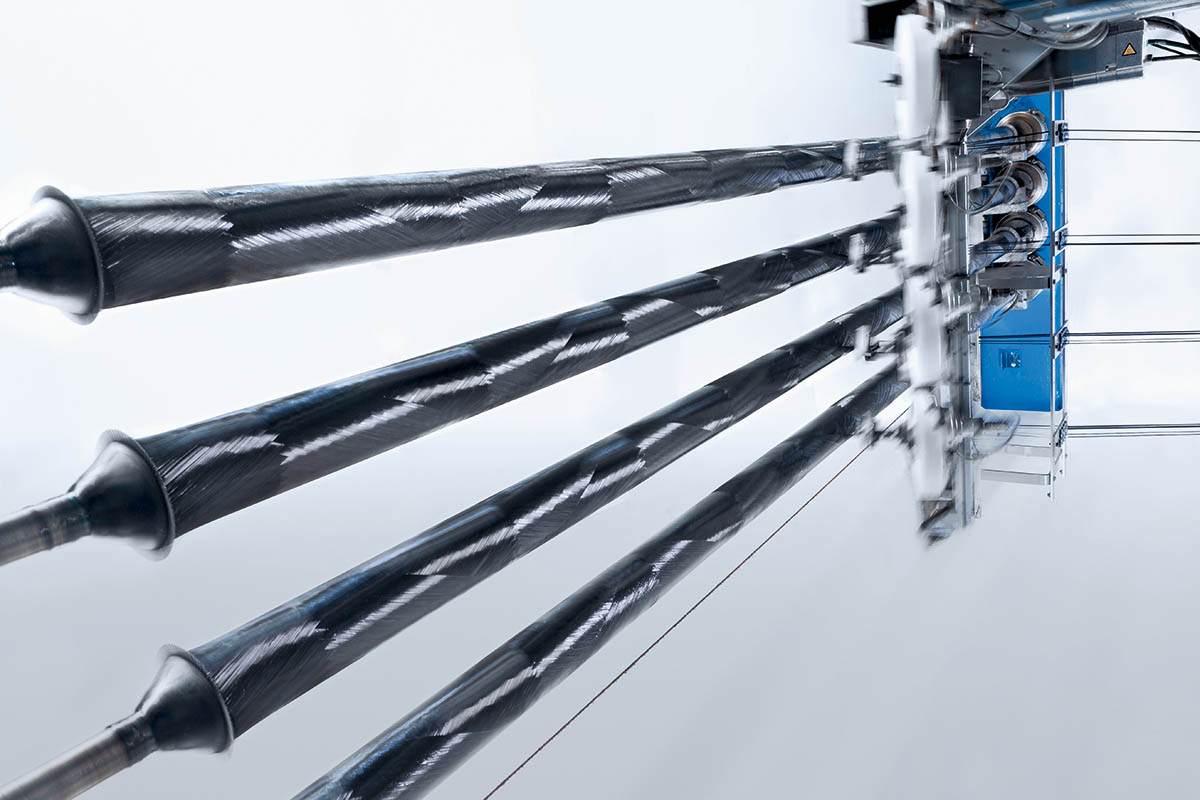
Wilfried Tappe: That’s a great question. A lot has changed in the last 30 years, especially in the two areas you mentioned. Nowadays, almost all flexographic printing machines print much faster than they used to, and the quality of modern flexographic printing is outstanding, too. It’s not unusual to see machines with working widths of 1600 mm, or even 2800 mm, in printing halls now, especially as far as preprint machines are concerned. These machines provide outstanding print quality, even under very difficult conditions. Before, you used to see a lot of problems – for example with gradients against white when combined with spot colours. In the context of all the changes I’ve mentioned, the use of carbon fibre reinforced plastic has been especially helpful. We have been pioneers in manufacturing and working with CFRP for many years. Using this material allows us to reduce vibrations and improve the consistency of components, as well as to take a targeted approach to meeting very specific requirements. From my point of view, that has to be one of the biggest innovations.
As for surprises, the current discussion around flexible packaging has been surprising me for a little while. The coronavirus pandemic we are going through at the moment is showing very clearly just how important flexible packaging is for us in our everyday lives. Manufacturers can now produce very thin films, which are used to protect our groceries and extend their shelf lives, among other things.

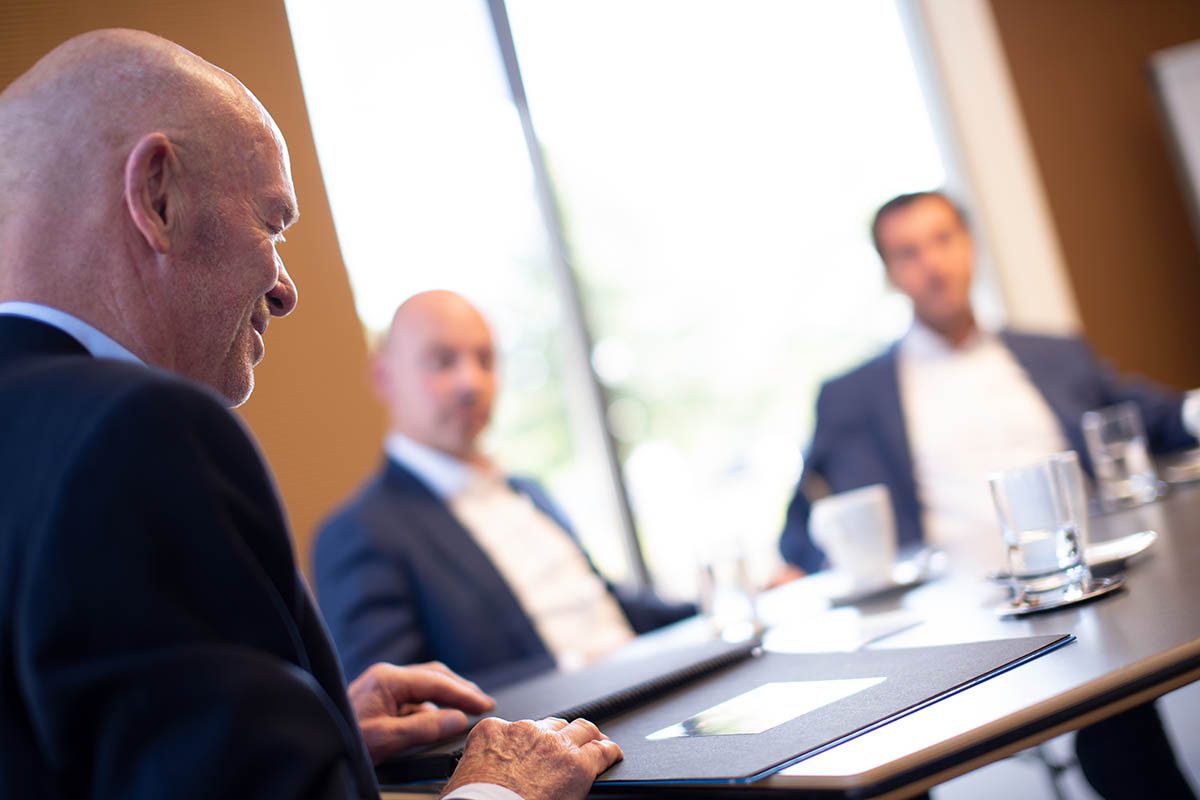
INOMETA was founded in 1981, which means it will celebrate its 40th anniversary next year. Can you tell us a little bit about how the company started, and how times have changed over the last 40 years?
Wilfried Tappe: 40 years. Yes, I suppose it must be! We have come an awfully long way in that time. I still remember the early years of the company very well. We started off in a little garage in the centre of Herford, making aluminium roller tubes. Aluminium was always our core material, and even now it is still an integral part of INOMETA’s product portfolio. Over the years, aluminium has been joined by CFRP and glass fibre-reinforced plastic (GFRP). Between the three of them, they now provide the foundation for our high-performance products – not least as far as flexographic printing is concerned. In fact, we were one of the very first companies to use carbon fibre or glass fibre to manufacture rollers.
But do you know what the best thing is, when I look back over the last 40 years? It is that we have always stuck to our guns, and have refined lightweight, precision manufacturing to perfection. Today, we cover the entire value chain for roller manufacturing. We make everything from aluminium or CFRP roller tubes to the end product, the finished roller – we are there at every step of the process. And that’s true of product development, too, which makes INOMETA unique. Because we support our customers at every step of the manufacturing process for flexible packaging, we can draw on huge breadth of experience. We manufacture substrates like paper or film, but we are also involved in all widely-used printing processes. You will even find INOMETA’s high-performance rollers and other technology being used in packaging and processing. I am really proud of that, especially because our innovations have left a mark on the market as a whole. What started off as our small-scale ideas have become market standards that serve as benchmarks not just for us, but for other manufacturers too. At the same time though, we have still managed to stay unique. For example, with our INOflex ® range, our complete system for flexographic printing, machinery manufacturers and print shops can source all the rotating components for printing and web guides from a single source. We are the only company that can offer that!

INOMETA delivers its roller systems to leading global manufacturers of machinery and plant for every stage of the flexible packaging production process, from substrate manufacturing (film extrusion, paper) to printing and coating, right through to lamination and roll packaging. What is it that makes your products stand out from your competition?
Wilfried Tappe: You know, that’s exactly the question that has been driving us forward since we started the company. There are a few different things you need to take into account here. Web guide systems have to meet the most stringent requirements. When it comes to complicated print images, for example product images printed on both sides of a film, the feed can be affected by a number of factors. You need a suitable coating, for instance. It might be non-stick, or it might be specifically designed to create a ‘sticky’ effect so that it takes the substrate layers. You also have to make sure that the substrate feed system doesn’t get damaged or leave any marks. The way the materials are integrated into individual rollers makes a difference, too. Depending on the load and the angle of contact, we can decide whether to use aluminium or CFRP web guide rollers. We have the facilities and expertise to make sure we use the perfect coating for every single roller. We can add grooves or spirals to make sure substrates can be fed through air pockets with no wrinkles. Even with the simplest applications, small details like using a well-designed and installed mounting to provide a low friction feed can be absolutely crucial. The problem of imbalances between individual web guide rollers is a major issue for any product, too. You have to balance them at a minimum of 2 levels, if not 3, to make sure everything runs smoothly.
Over the last few decades, both the productivity and the precision of plant and machinery have increased considerably to meet ever more demanding requirements for packaging.
Wilfried Tappe: You’re absolutely right – precision and productivity have both improved markedly. I noticed this trend even at the very beginning of my career. This strikes me as a good point at which to hand over to INOMETA’s current Executive Directors. My son Cedric Tappe and our Executive Director Christof Schotten will be able to give you a better idea of current requirements. Both of them are much more deeply involved in the day-to-day running of the business than I am, and I am sure they will be able to give you much more detailed information about the latest generation of machinery and the current state of the markets. Looking back over 40 years of INOMETA’s history, what I can tell you is that our products have never been as good or as high-quality as they are now. Of course, this is due in no small part to the exacting requirements of our customers, and we have grown together with them over all these years. So I would like to take this opportunity to say thank you to them, and to hand over to the current management.

I can well believe that. Thank you very much for your insights, and hello to Cedric Tappe and Christof Schotten, INOMETA’s current Executive Directors. What’s your view on more demanding requirements and increased precision in the industry? Christoph Schotten, how do you think rollers have changed over the decades from the point of view of the materials used, blanks, coatings, coating processes and surface structures?
Christof Schotten: Hello Mr Wessendorf! I can certainly tell you a bit about that. Any system is only ever as good as its weakest component. If even one part doesn’t work as well as the others, the overall quality of the system is reduced. The way to avoid that is to think in terms of the whole printing system. Our product development and product management teams have done fantastic work over the years to apply and develop Wilfried Tappe’s mantra of ‘innovation down to the smallest detail’. INOMETA can now provide lightweight construction, high performance and precision in every area of a flexographic printing system. Our products help machinery manufacturers to deliver their ideas. They combine a flexible approach to each individual print job with the exact level of performance needed to meet the customer’s requirements. In today’s market, it’s no longer enough to build a product that will work at any speed. If requirements change, if machines are expected to run faster or more slowly, this means changing requirements for individual components like anilox rollers, CFRP bridge adapters or shafts. Meeting these changing requirements needs a flexible product portfolio that will allow you to react quickly and easily to those changes.
Flexographic printing has emerged as the leading procedure for printing packaging over the last three decades. INOMETA provides roller parts for flexographic printing units, as well as other rotating components for flexographic printing. Why do you think flexographic printing has been so successful?
Christof Schotten: To answer this question, I think you have to mention people in a variety of different sectors, all of whom have been working very hard over a number of decades. The OEMs are obviously very important, but so are the ink and substrate suppliers and, last but not least, so are we, as printing component manufacturers. Over the last few years we have managed to raise the print quality from flexographic printing machines to an outstandingly high level, and perhaps even to perfect it. As has already been mentioned, the days of gradients within the printed image causing all sorts of problems are long gone. Even for very variable print runs, flexographic printing is very versatile, and it has become a profitable way of handling even very small print runs. This makes it particularly attractive for branded goods, because large numbers of different products can be incorporated into the same order while retaining the same total output.


Cedric Tappe, how important do you think the development of sleeves made from carbon fibre reinforced plastic (CFRP) is in this respect?
Cedric Tappe: For flexographic printing, shafts, pressure adapters, anilox sleeves and plate mounting sleeves are the key components for the print machinery. The fact speeds are constantly increasing, combined with increasing working widths, means that carbon fibre reinforced plastic has become absolutely indispensable as a material. The only way you can get outstanding print quality at high print speeds is to increase rigidity across the board. INOMETA has been manufacturing and developing products with CFRP parts since 1987. We recognised the potential of this material very early on, and quickly realised it would be crucial for our future product range.
What are the particular challenges associated with a sleeve/roller system in a modern flexographic printing machine?
Cedric Tappe: For me, it’s important that all the individual components work together perfectly. That’s the only way of combining great results with very short manufacturing times without increasing machine downtime. To make sure that all the components complement each other perfectly, you need real experts in roller and sleeve manufacturing. You have to remember that everything has to be exactly right – even the smallest discrepancy can cause the entire system to malfunction. That’s why we introduced the INOflex® system back in 2010. We are the only company on the market that can offer its customers a comprehensive system all under one roof. We can now produce shafts, adapters, anilox rollers and sleeves, plate mounting sleeves and winding cores, as well as the web guide rollers we have already mentioned and sensor rollers with a wide range of different functional surfaces. As you can see, we have developed a very wide range of products, one in which customers can find all the rotating components they need for their print machinery.
Can you explain to our readers how anilox rollers and anilox sleeves (particularly their ceramic coatings), line resolution, laser engraving, pick-up volumes, cell shapes and ‘open engravings’ have changed over the last 30 years? What was it that triggered all these changes?
Christof Schotten: I certainly can, but if we want to go into all the technical details, I would prefer to refer your question to one of our anilox roller specialists. INOMETA’s ability to concentrate on what it’s really good at has always been one of its strengths. The watchword here as far as specialists like us are concerned is ‘focus’. And there’s one thing I can tell you that applies not just to anilox rollers, but to the entire printing and packaging equipment sector: our capabilities have improved very quickly, but requirements have moved on just as fast. There are a lot of specialist applications that demand constant technological development and expanding product portfolios. Over the last few years, our coating specialists have developed a variety of solutions designed to combat corrosion, for instance. The aim at every stage of the development process was to create added value for customers. Durability and ensuring the reliability of the relevant processes were, and are, key considerations, as is the need to maximise print quality. Thanks to continuous technological development within INOMETA’s manufacturing procedures, we are now able to cover the full length of the value chain. We’ve got full control over all our processes, from roller cylinders to engraving anilox rollers, and we can adjust a number of different variables to ensure our anilox rollers are a perfect fit for the customer’s individual requirements. Actually, that’s one thing that has changed very significantly. Before, they used to be a handful of different types of anilox rollers. Now there is a huge number of different configurations, which means we can adapt the ceramic layer, the line resolution, laser engraving, pick-up volumes, or cell shapes to suit each specific job.

Do you think there’s any more potential for anilox rollers/sleeves to develop in the future?
Christof Schotten: As in a lot of different industrial sectors, efficiency, speed and the ability to switch between print jobs quickly are key, as are flexibility and productivity. We have reached a very high level in all these areas. However, in other areas we still see more potential to develop our products and processes, and to make them more productive. Requirements are changing all the time and new ones are constantly being added, so you need to be able to develop and adapt current printing equipment and web guide roller components flexibly to meet those requirements. If we look back at the way the industry has developed over the last 40 years, we can see that we have reached a number of milestones in that time. Basically we are still dealing with similar issues to the ones Wilfried Tappe faced at the very beginning 40 years ago. We still want to keep making our products even better, faster and lighter, and then to use them to achieve sustainable improvements in print quality, machine performance and handling.
What new ideas, innovations and developments is INOMETA working on at the moment?
Cedric Tappe: Our desire to keep coming up with better products and make them easier to use is what drives us every day. Our aim is to help our customers to optimise, simplify and speed up their processes, at the same time as making them more cost-effective and efficient. That has always been at the core of INOMETA’s approach. At the beginning, my father was driven to produce better, lighter aluminium rollers. The product he was making wasn’t flashy, but he was determined to keep on making it more precise and to provide better and better performance. Even then, it wasn’t just about producing any old rollers – he wanted to make the best rollers on the market. He even used to deliver some of them to customers in person, and some of those customers are still loyal INOMETA partners today. He then went on to transmit his attitude to me and to the next generation of the firm’s leadership. The operational side of the business is now in my hands, along with those of Executive Director Christof Schotten. Even if my father is no longer involved in the day-to-day operations of the company, our fundamental values haven’t changed. Our personal, long-term and highly successful customer relationships are still based on a combination of innovative products and unique solutions. The difference is that the business is about more than aluminium rollers nowadays – it’s about delivering high-tech, intelligent, lightweight systems. But the basic aim of helping INOMETA customers to optimise, simplify or speed up their procedures, or to make them cheaper or more efficient, is still the same as it always been. We are all very proud to have been doing that for so long.
This interview was conducted by Ansgar Wessendorf from Flexo+Tief-Druck
Further information about anilox rollers and sleeves
For further information, please visit the Website for INOflex® Printing Products at printing.inometa.de
Products

About INOMETA

About AVANCO